Blake Meier · 5 October 2026
Decoding Engagement Loops and Their Influence on Listing Visibility Within Curated Ecommerce Environments
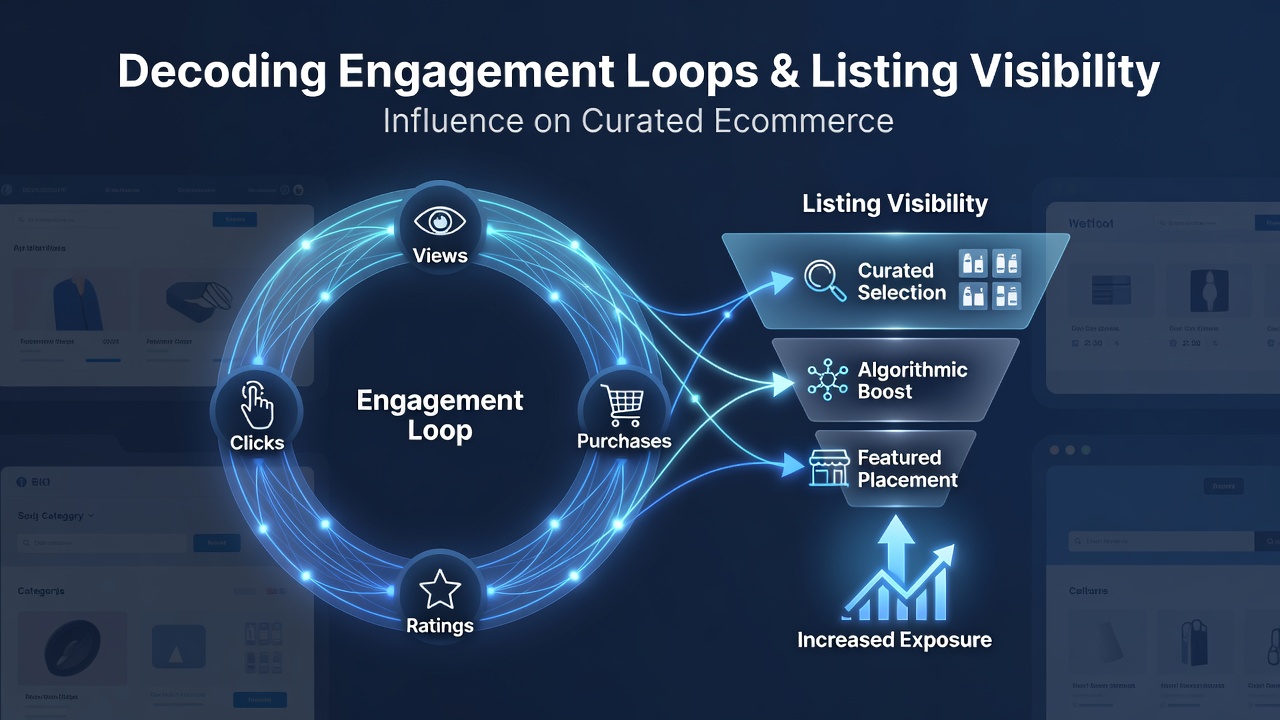
Engagement loops form through repeated cycles of user actions such as views, clicks, cart additions, and purchases that feed back into platform algorithms, and these cycles determine how prominently individual listings appear in curated ecommerce settings where editors or automated systems select featured products. Platforms collect signals from these interactions to adjust visibility rankings, with higher engagement often leading to increased exposure while lower activity results in reduced placement over time.
Core Components of Engagement Loops in Ecommerce
Observers note that engagement loops begin when a listing receives initial traffic from search results or recommendations, after which metrics like dwell time and interaction depth influence whether the item receives further promotion, and this process continues as subsequent users encounter the same listing in elevated positions. Data from industry analyses shows that platforms track repeat visits and review submissions as additional inputs that reinforce or diminish a product's algorithmic score, whereas listings without sustained activity tend to drop in priority within curated collections.
Researchers have documented several measurable factors within these loops including click-through rates from category pages, conversion percentages after product views, and social sharing volumes that extend reach beyond the immediate platform. In curated environments such as specialty marketplaces for handmade goods or niche consumer items, human moderators sometimes incorporate these quantitative signals alongside qualitative assessments to decide which listings remain highlighted in seasonal collections or editorial spotlights.
Mechanisms Linking Engagement to Visibility Rankings
Algorithms process engagement data through weighted models that prioritize listings demonstrating consistent user interest, and this weighting occurs because platforms aim to surface items likely to maintain activity levels across broader user bases. Evidence from platform documentation and third-party audits indicates that a listing's position can shift within hours when engagement metrics cross certain thresholds, while prolonged periods of inactivity trigger demotion to lower visibility tiers. Those studying vertical marketplaces have found that curated selections often amplify these effects since editorial placement provides an initial boost that engagement loops then either sustain or erode.
Empirical Patterns Observed Across Platforms
Studies of multiple ecommerce sites reveal recurring patterns where listings with early positive interactions accumulate visibility advantages that compound over days and weeks, whereas items failing to generate quick responses experience progressive isolation from recommendation feeds. According to research published by academic institutions examining recommendation systems, platforms in regions including the European Union apply similar engagement-based adjustments to comply with transparency requirements around algorithmic decision-making, and data collected through 2025 demonstrates measurable differences in listing performance tied directly to loop strength. One analysis of North American marketplaces showed that products entering strong engagement cycles achieved up to several times the impressions compared with similar items lacking initial traction, although exact multipliers vary by category and season.
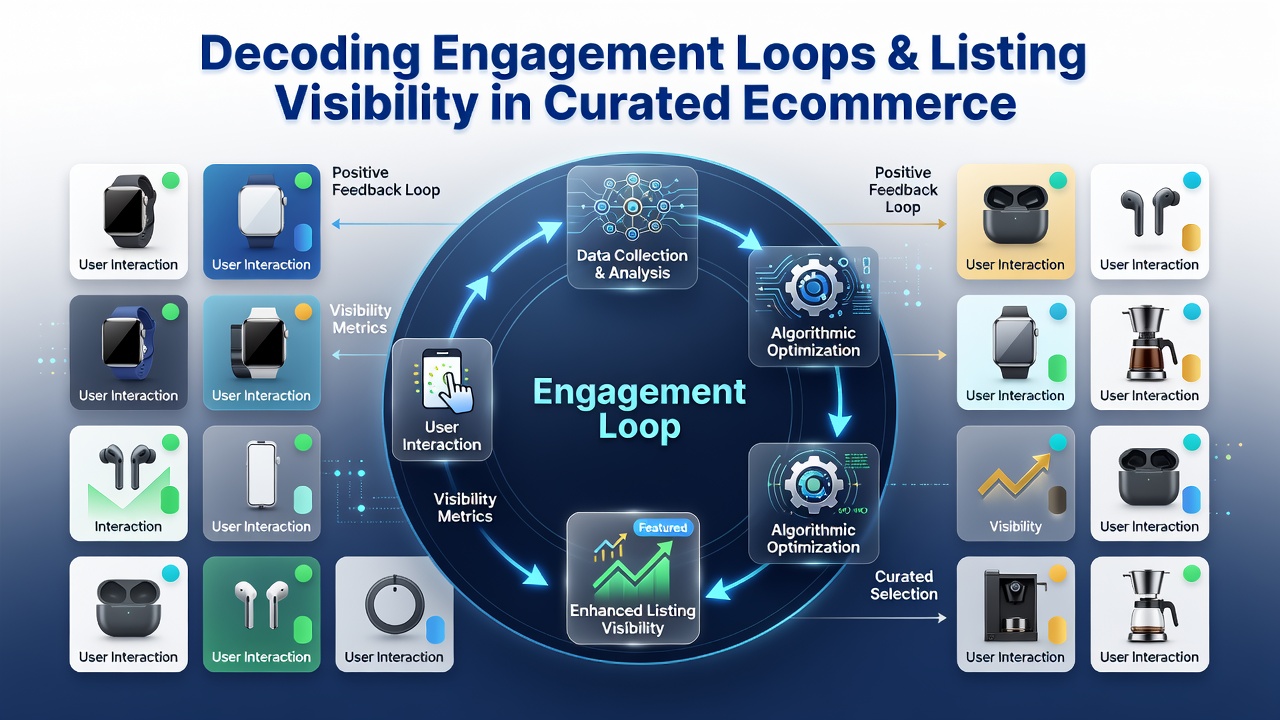
Platform operators in Australia and Canada have released aggregate statistics indicating that engagement loops influence not only organic search rankings but also inclusion in email newsletters and push notifications, which further extend the cycle by driving additional targeted traffic. These external channels create secondary loops that feed primary visibility metrics, and listings benefiting from such amplification tend to maintain elevated positions longer than those relying solely on internal browsing behavior.
Variables That Modulate Loop Effectiveness
Several external elements affect how engagement loops translate into sustained visibility, including product category competitiveness, seasonal demand fluctuations, and the presence of competing listings with overlapping attributes. In October 2026 observers expect continued refinement of these models as platforms integrate more granular behavioral data from mobile applications and connected devices, allowing finer distinctions between casual browsing and purchase-intent signals. Listings in curated sections face additional constraints because editorial teams periodically refresh selections based on performance thresholds that incorporate engagement velocity rather than absolute volume alone.
Technical aspects such as page load speed and mobile responsiveness also contribute to loop formation since faster experiences correlate with longer session durations that platforms interpret as positive engagement. Industry reports from organizations tracking digital commerce across Asia-Pacific markets confirm that technical optimizations frequently produce measurable lifts in loop initiation rates, particularly for listings already positioned in featured categories.
Conclusion
Engagement loops operate as self-reinforcing systems where user interactions directly shape listing visibility within curated ecommerce platforms, and understanding these dynamics requires attention to both quantitative metrics and platform-specific curation practices. Data gathered across multiple jurisdictions demonstrates consistent relationships between sustained engagement and ranking stability, while interruptions in these cycles typically lead to reduced exposure. Continued monitoring of algorithmic updates remains necessary for participants seeking to maintain visibility in these environments, since the interplay between user behavior and platform logic continues to evolve with new data sources and regulatory frameworks.