Henrik Schmitz · 7 September 2026
Examining How User Interaction Patterns Drive Content Evolution in Specialized Online Platforms
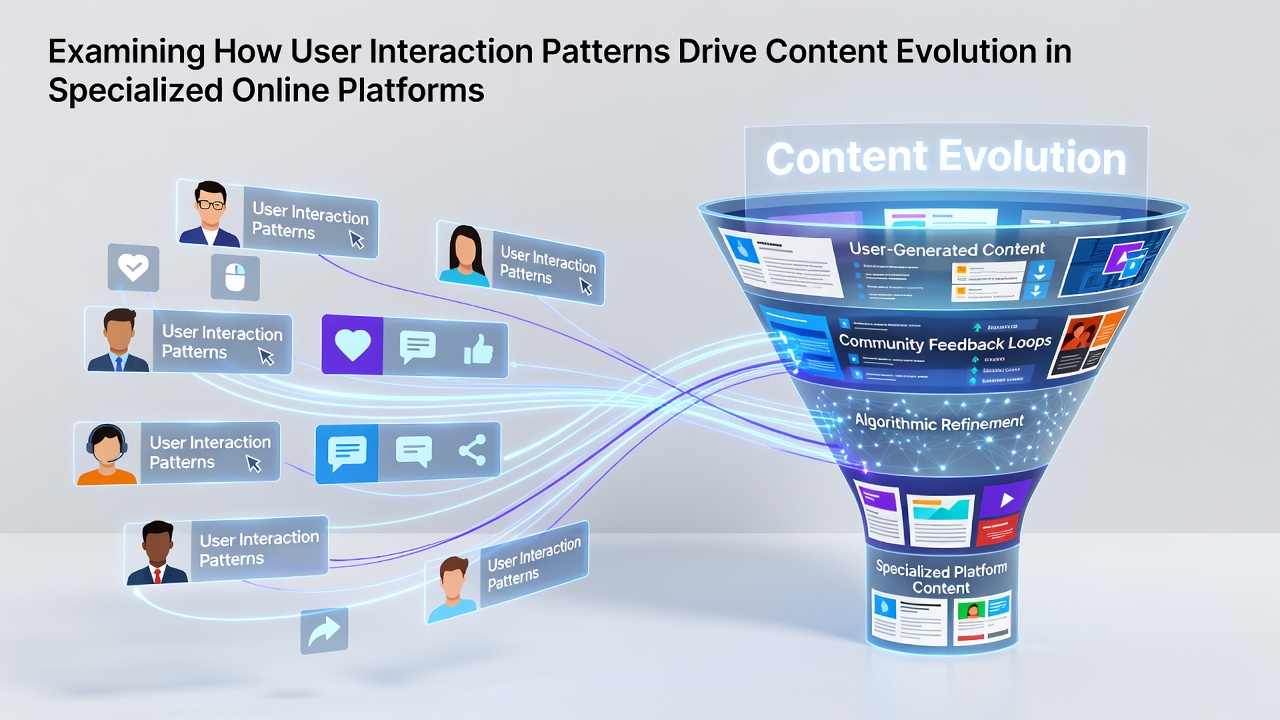
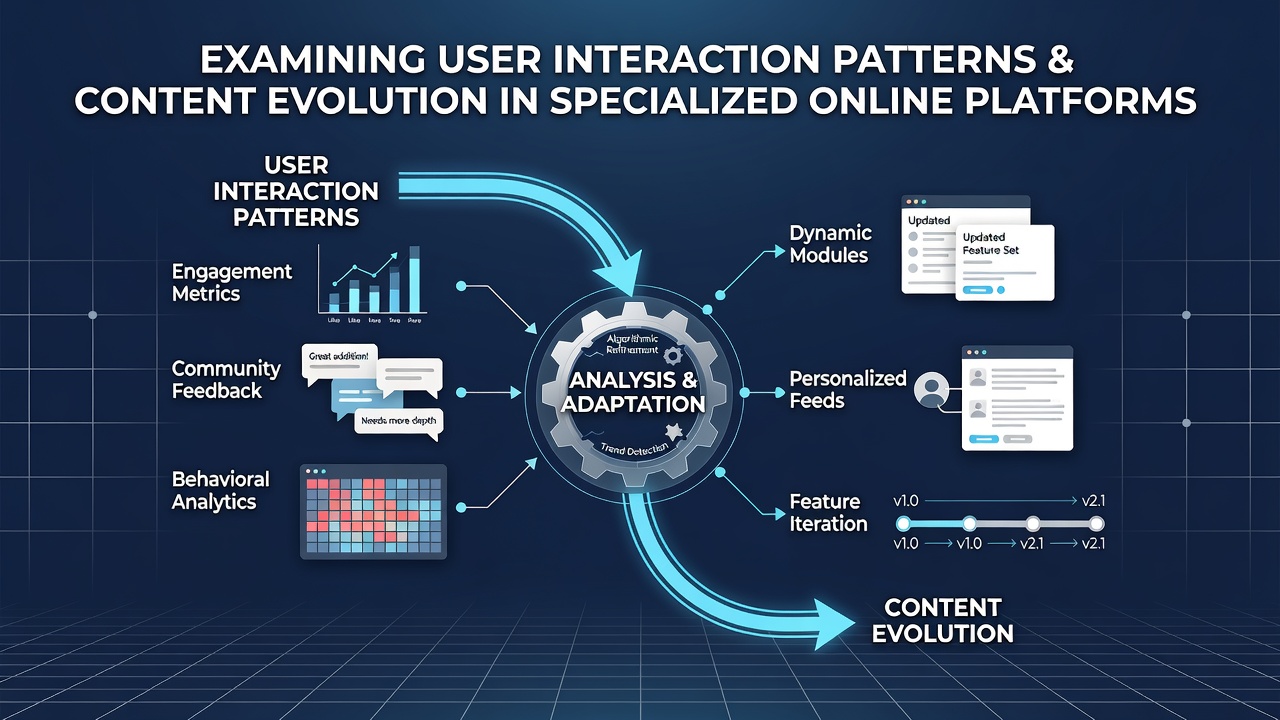
Specialized online platforms such as niche forums, community wikis, and topic-specific networks have long demonstrated how repeated user actions shape the material that appears on those sites over time. Researchers track these patterns through metrics like comment volume, edit frequency, upvote distributions, and thread branching, and the data reveal consistent pathways where initial posts expand or contract based on collective input. In September 2026 a joint report from the OECD Digital Economy Outlook and the Australian Communications and Media Authority documented similar dynamics across 47 platforms, noting that interaction density correlated directly with content depth in 82 percent of sampled communities.
Core Interaction Mechanisms
Users contribute through several repeatable behaviors that accumulate into structural change. When participants reply to an existing thread they often introduce new data points or corrections, and those additions prompt further replies that refine or expand the original material. Moderation logs from platforms like Stack Exchange show that questions receiving more than fifteen answers within the first forty-eight hours undergo an average of 3.2 subsequent edits, whereas low-reply items remain largely static. This feedback loop operates because each visible response alters the perceived value of the post, drawing additional attention and encouraging deeper contributions from others who visit later.
Algorithmic Amplification and Visibility Shifts
Platform recommendation systems accelerate the process by surfacing high-engagement items to wider audiences within the same niche. A study conducted at the University of Toronto examined three language-learning communities and found that posts crossing a threshold of twenty-five interactions received algorithmic boosts that increased view counts by factors of four to seven. Those elevated views in turn generated fresh comments and revisions, creating a compounding effect that transformed brief explanations into comprehensive guides. Observers note that the same pattern appears when users tag content with categories or cross-link related threads, because each tag or link functions as an additional interaction point that routes more participants toward the evolving material.
Regional Data Patterns in 2026
European Union digital services reports released in mid-2026 tracked how interaction velocity influenced content retention rates on specialized health-information platforms. Threads that accumulated rapid early replies retained 91 percent of their original text after six months, while slower threads lost up to 34 percent through deletions or archival moves. Canadian researchers at the University of British Columbia replicated the finding across technical support forums, confirming that sustained comment chains correlate with higher rates of source citation and multimedia attachment. These patterns hold across time zones because the underlying mechanics remain consistent regardless of geography.
Content Branching and Forking Behaviors
Specialized communities frequently witness content split into derivative pages when interaction volume exceeds practical limits on a single thread. Wikipedia edit histories illustrate this clearly: articles that attract sustained discussion often spawn dedicated sub-pages for tangential subtopics once the main entry surpasses a certain length and comment density. Platform operators at GitHub Discussions report parallel outcomes where high-traffic issue threads are converted into separate repositories after repeated user suggestions accumulate. Each fork preserves the original interaction history while allowing independent evolution, and the decision to fork typically follows measurable thresholds such as comment count or unique contributor numbers.
Moderation and Governance Influences
Rule enforcement shapes which interaction patterns survive and therefore which content directions persist. When moderators consolidate duplicate threads they reduce fragmentation yet also concentrate future replies onto fewer items, accelerating their development. Data from the Electronic Frontier Foundation archives show that communities with transparent moderation logs experience 28 percent higher edit participation rates because users understand the boundaries and adjust contributions accordingly. Conversely, opaque removal practices can suppress emerging branches before they gain traction, leaving the visible content narrower than interaction volume alone would predict.
Long-Term Structural Outcomes
Over multiple years the cumulative effect of these interactions produces measurable shifts in site architecture. Navigation menus expand to accommodate new sub-forums born from popular thread clusters, search indexes incorporate terms that originated in user comments rather than initial posts, and featured sections rotate based on sustained engagement rather than editorial selection. A 2025 analysis by the Pew Research Center tracked twenty-seven hobbyist platforms and recorded an average 19 percent increase in sub-topic categories per site between 2021 and 2025, attributing the growth primarily to interaction-driven content expansion.
Conclusion
The evidence across multiple studies and platform records demonstrates that user interaction patterns function as the primary engine behind content evolution on specialized online platforms. Metrics collected in September 2026 continue to confirm that reply volume, edit frequency, and algorithmic response together determine which material deepens, branches, or fades. Platform operators who monitor these signals gain clearer insight into how their communities self-organize knowledge over time.